Introduction
Diabetes is one of the most common chronic health conditions worldwide, affecting millions of people across all age groups. Despite increased awareness and medical advancements, many misconceptions about diabetes continue to circulate.
These myths can create confusion, lead to poor health decisions, and sometimes prevent individuals from seeking proper treatment or making necessary lifestyle changes.
Diabetes occurs when the body cannot properly regulate blood sugar levels. This can happen because the body does not produce enough insulin, cannot effectively use insulin, or both.
While diabetes is a serious condition, many of the beliefs surrounding it are inaccurate. Understanding the facts can help people better manage their health and support loved ones living with diabetes.
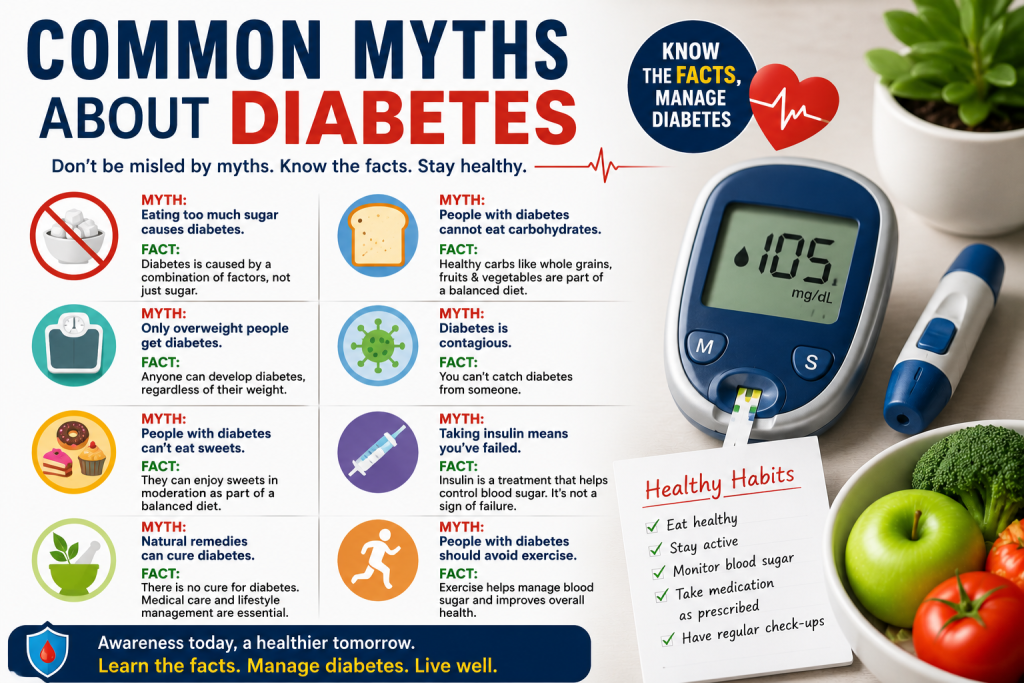
Myth 1: Eating Too Much Sugar Directly Causes Diabetes
One of the most widespread myths is that eating sugar alone causes diabetes. While consuming excessive amounts of sugary foods can contribute to weight gain and obesity, diabetes is much more complex.
Type 1 diabetes is an autoimmune condition where the body’s immune system attacks insulin-producing cells in the pancreas. It is not caused by eating sugar.
Type 2 diabetes develops due to a combination of genetic factors, lifestyle habits, insulin resistance, and other health conditions.
Although reducing added sugar is beneficial for overall health, no single food directly causes diabetes on its own.
Myth 2: People with Diabetes Cannot Eat Carbohydrates
Many people believe that individuals with diabetes must completely avoid carbohydrates. In reality, carbohydrates are an important source of energy and can be part of a healthy diabetes management plan.
The key is choosing healthier carbohydrate sources such as:
- Whole grains
- Fruits
- Vegetables
- Legumes
- High-fiber foods
Monitoring portion sizes and balancing carbohydrate intake with protein and healthy fats can help maintain stable blood sugar levels.
Myth 3: Diabetes Is Not a Serious Disease
Some people assume diabetes is a minor health issue that can easily be ignored. However, uncontrolled diabetes can lead to serious complications affecting multiple organs throughout the body.
Long-term complications may include:
- Heart disease
- Stroke
- Kidney disease
- Vision loss
- Nerve damage
- Foot complications
Proper management is essential to reduce these risks and maintain overall health.
Myth 4: Only Overweight People Get Diabetes
While excess body weight is a major risk factor for Type 2 diabetes, it is not the only factor involved. People of normal weight can also develop diabetes.
Genetics, family history, age, ethnicity, hormonal conditions, physical inactivity, and other health factors can contribute to diabetes risk. Likewise, many overweight individuals never develop diabetes.
Body weight is only one piece of a much larger picture.
Myth 5: Diabetes Is Contagious
Diabetes cannot be spread from one person to another. It is not caused by viruses, bacteria, or physical contact.
Because diabetes is a metabolic condition influenced by genetics, lifestyle, and immune system factors, it cannot be “caught” like a cold or flu. Understanding this fact helps reduce stigma and misinformation surrounding the condition.
Myth 6: People with Diabetes Cannot Eat Sweets
Having diabetes does not mean a person can never enjoy sweets again. The reality is that occasional treats can often fit into a balanced meal plan when consumed in moderation.
The focus should be on overall dietary patterns rather than completely eliminating specific foods. Healthcare professionals often help individuals develop personalized eating plans that allow flexibility while maintaining healthy blood sugar levels.
Moderation and portion control are far more important than complete restriction.
Myth 7: Insulin Means You’ve Failed
Some people believe that needing insulin therapy means they have failed to manage their diabetes properly. This misconception can create unnecessary guilt and anxiety.
Diabetes is a progressive condition for many individuals. Over time, the pancreas may produce less insulin, making medication or insulin therapy necessary regardless of lifestyle efforts.
Using insulin when prescribed is a responsible step toward maintaining healthy blood sugar levels and preventing complications.
Myth 8: People with Diabetes Should Avoid Exercise
Exercise is actually one of the most effective tools for diabetes management. Physical activity helps improve insulin sensitivity, supports weight management, and contributes to healthier blood sugar levels.
Regular exercise can provide benefits such as:
- Improved cardiovascular health
- Better blood sugar control
- Increased energy
- Reduced stress
- Weight management support
Individuals with diabetes should consult healthcare providers about the most appropriate exercise routine for their specific needs.
Myth 9: Natural Remedies Can Cure Diabetes
Many products and alternative treatments claim to cure diabetes completely. While some natural approaches may support overall health, there is currently no proven cure for most forms of diabetes.
Healthy eating, regular exercise, medication when necessary, and medical supervision remain the foundation of effective diabetes management.
People should be cautious of products that promise quick fixes or miracle cures without scientific evidence.
Myth 10: If You Feel Fine, Your Diabetes Is Under Control
Diabetes often progresses silently. Many people experience few or no symptoms even when blood sugar levels remain elevated.
Feeling healthy does not necessarily mean diabetes is well managed. Regular blood sugar monitoring, medical checkups, and recommended testing are important for tracking long-term control and preventing complications.
Relying solely on symptoms can lead to delayed treatment and increased health risks.
Myth 11: Diabetes Only Affects Older Adults
Although Type 2 diabetes becomes more common with age, it can affect younger adults, teenagers, and even children. Rising obesity rates and sedentary lifestyles have contributed to an increase in younger individuals being diagnosed with Type 2 diabetes.
Type 1 diabetes is also commonly diagnosed during childhood or adolescence, although it can develop at any age.
Diabetes is not limited to older populations.
Myth 12: Prediabetes Is Not a Concern
Prediabetes occurs when blood sugar levels are higher than normal but not yet high enough for a diabetes diagnosis. Some people mistakenly believe it is harmless.
In reality, prediabetes significantly increases the risk of developing Type 2 diabetes, heart disease, and stroke.
The good news is that lifestyle changes such as improved diet, increased physical activity, and weight management can often delay or prevent progression.
Early action is extremely important.
The Importance of Diabetes Education
Education is one of the most powerful tools in diabetes prevention and management. Understanding how diabetes works enables individuals to make informed decisions about nutrition, exercise, medication, and lifestyle habits.
Accurate information can help reduce fear, improve treatment adherence, and support healthier outcomes for people living with diabetes.
Healthcare professionals, certified diabetes educators, and reliable medical sources remain the best resources for diabetes-related guidance.
Conclusion
Diabetes is surrounded by many myths that can create confusion and prevent effective management. Misconceptions such as believing sugar alone causes diabetes, assuming people with diabetes cannot eat carbohydrates, or thinking insulin represents failure can lead to misunderstandings about the condition.
The truth is that diabetes is a complex health condition influenced by multiple factors.
With proper education, healthy lifestyle choices, regular medical care, and evidence-based treatment, people with diabetes can live healthy, active, and fulfilling lives.
Understanding the facts helps replace fear with knowledge and empowers individuals to take control of their health.