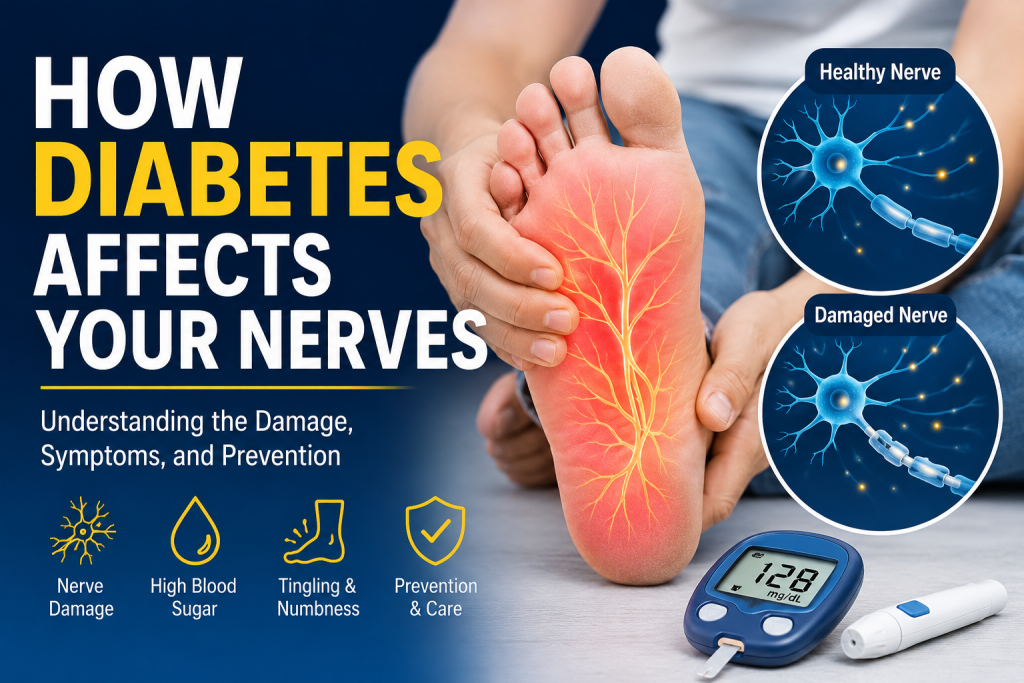
Living with diabetes involves more than simply managing blood sugar levels. Over time, consistently high blood glucose can affect many parts of the body, including the eyes, kidneys, heart, and nervous system. One of the most common long-term complications is diabetic neuropathy, a condition that damages the nerves and can significantly impact your quality of life.
Many people don’t realize nerve damage is developing until symptoms become noticeable. Tingling in the feet, numbness in the hands, burning sensations, or muscle weakness may seem minor at first, but they can become more serious if left untreated. The encouraging news is that early detection and proper diabetes management can help reduce the risk of nerve damage and slow its progression.
One of the key factors behind nerve damage is high blood glucose, also known as hyperglycemia. You can learn more about Hyperglycemia and how it affects the body.
Understanding Diabetic Neuropathy
Your nervous system is responsible for sending messages between your brain, spinal cord, and every part of your body. These signals allow you to feel pain, temperature, pressure, and movement while also controlling many automatic body functions.
When blood sugar levels remain high for months or years, they can gradually damage both nerves and the tiny blood vessels that supply them with oxygen and nutrients. This condition is known as Diabetic Neuropathy.
Not everyone with diabetes develops nerve damage, but the risk increases with poor blood sugar control, longer duration of diabetes, smoking, obesity, and high blood pressure.
Why Does Diabetes Damage Nerves?
Healthy nerves rely on a constant supply of oxygen and nutrients delivered through small blood vessels.
When blood glucose stays elevated for long periods, it can:
- Damage small blood vessels that nourish nerves
- Increase oxidative stress
- Trigger chronic inflammation
- Reduce the ability of nerves to repair themselves
- Slow communication between the brain and body
Over time, damaged nerves struggle to send signals properly, leading to the symptoms commonly associated with diabetic neuropathy.
Common Symptoms of Diabetic Nerve Damage
Symptoms often begin gradually and may go unnoticed in the early stages.
Common signs include:
- Numbness in the feet or hands
- Tingling or “pins and needles” sensations
- Burning pain
- Sharp or stabbing discomfort
- Increased sensitivity to touch
- Muscle weakness
- Difficulty maintaining balance
- Loss of coordination
Some people notice symptoms mainly at night, while others experience them throughout the day.
Different Types of Diabetic Neuropathy
Diabetes can affect different groups of nerves.
Peripheral Neuropathy
This is the most common type.
It usually affects:
- Feet
- Toes
- Legs
- Hands
- Fingers
Many people first notice numbness in their toes before symptoms gradually spread upward.
Autonomic Neuropathy
The autonomic nervous system controls automatic body functions such as:
- Digestion
- Heart rate
- Blood pressure
- Sweating
- Bladder function
Damage to these nerves may lead to digestive issues, dizziness when standing, bladder problems, or changes in heart rate.
Proximal Neuropathy
Although less common, this form affects larger nerves in the hips, thighs, or buttocks.
Symptoms often include severe pain on one side of the body and muscle weakness.
Focal Neuropathy
This type develops suddenly and usually affects a single nerve.
It may involve:
- Face
- Eyes
- Chest
- Abdomen
- Legs
Fortunately, focal neuropathy often improves over time with appropriate medical care.
Who Is Most at Risk?
Several factors increase the likelihood of developing diabetic neuropathy.
These include:
- Poorly controlled diabetes
- Living with diabetes for many years
- Smoking
- High blood pressure
- High cholesterol
- Obesity
- Physical inactivity
- Kidney disease
Managing these risk factors can help reduce the chances of nerve damage.
How Blood Sugar Control Protects Your Nerves
Keeping blood glucose within your target range is one of the most effective ways to protect your nerves.
Healthy blood sugar management helps:
- Reduce further nerve damage
- Improve circulation
- Support nerve function
- Lower the risk of diabetes complications
- Improve overall quality of life
Although existing nerve damage may not always be reversible, maintaining healthy glucose levels can slow progression significantly.
Lifestyle Habits That Support Healthy Nerves
Good daily habits play an important role in protecting your nervous system.
Eat a Balanced Diet
Choose nutrient-rich foods such as:
- Vegetables
- Whole grains
- Lean protein
- Healthy fats
- Beans
- Nuts
- Fruits in appropriate portions
Foods rich in Vitamin B12, Vitamin D, and Omega-3 fatty acids may help support healthy nerve function as part of a balanced diet.
Stay Physically Active
Regular exercise improves:
- Blood circulation
- Blood sugar control
- Heart health
- Muscle strength
- Balance
Even a 30-minute walk most days of the week can provide meaningful health benefits.
Stop Smoking
Smoking damages blood vessels and reduces circulation, making it harder for nerves to receive oxygen and nutrients.
Quitting smoking supports both cardiovascular and nerve health.
Maintain a Healthy Weight
Achieving and maintaining a healthy weight improves insulin sensitivity and helps reduce pressure on nerves, joints, and blood vessels.
Don’t Ignore Foot Care
Since diabetic neuropathy often affects the feet first, daily foot care becomes especially important.
Simple habits include:
- Checking your feet every day
- Wearing properly fitted shoes
- Keeping your feet clean and dry
- Moisturizing dry skin (avoiding areas between the toes)
- Trimming toenails carefully
- Reporting cuts, blisters, or sores to your healthcare provider promptly
Early treatment helps prevent infections and more serious complications.
When Should You Seek Medical Advice?
Speak with your healthcare provider if you notice:
- Persistent numbness
- Burning pain
- Tingling sensations
- Muscle weakness
- Loss of balance
- Foot sores that do not heal
- Sudden changes in sensation
Early evaluation allows healthcare professionals to identify the cause and recommend appropriate treatment.
Can Diabetic Neuropathy Be Prevented?
While there is no guaranteed way to prevent diabetic neuropathy, many cases can be delayed or minimized through healthy lifestyle choices.
The most effective preventive measures include:
- Managing blood sugar consistently
- Eating a balanced diet
- Exercising regularly
- Monitoring blood pressure and cholesterol
- Avoiding tobacco products
- Scheduling regular diabetes checkups
- Performing daily foot inspections
Consistency over time is far more effective than making occasional drastic changes.
Final Thoughts
Diabetic neuropathy is one of the most common complications of diabetes, but it doesn’t develop overnight. By keeping your blood glucose under control, staying physically active, eating a nutrient-rich diet, and practicing good foot care, you can help protect your nerves and maintain your quality of life.
If you notice symptoms such as tingling, numbness, burning pain, or weakness, don’t ignore them. Early recognition and timely medical care can make a significant difference in slowing the progression of nerve damage and supporting long-term health.
Taking small, consistent steps every day can go a long way toward protecting both your nervous system and your overall well-being.