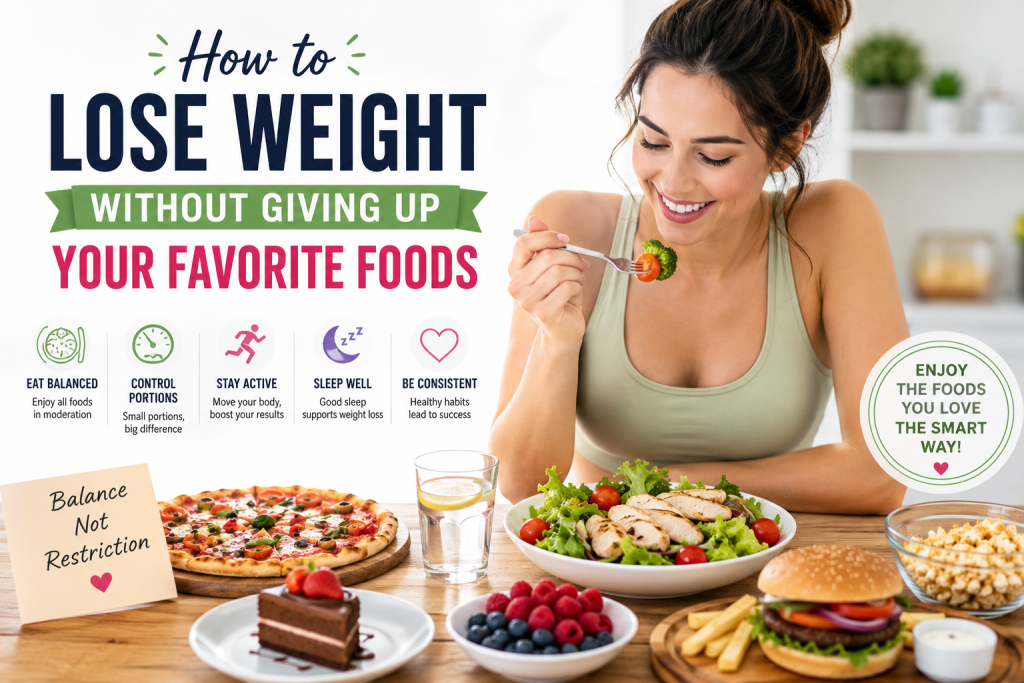
If you’ve ever started a diet only to quit because you missed pizza, burgers, chocolate, or your favorite dessert, you’re not alone. Many people believe that losing weight means saying goodbye to the foods they love. Fortunately, that’s one of the biggest myths about healthy weight loss.
The truth is that successful weight management isn’t built on restriction—it’s built on balance. Rather than labeling foods as “good” or “bad,” nutrition experts encourage creating eating habits that you can maintain for years, not just weeks.
At the heart of healthy weight loss is the principle of energy balance, often explained through the science of calories. When your body uses more energy than it consumes over time, gradual weight loss can occur. However, the way you achieve that balance matters just as much as the numbers.
Why Most Diets Fail
Crash diets often promise rapid weight loss, but they usually come with strict food restrictions that make them difficult to follow. Eliminating your favorite foods can lead to cravings, frustration, and eventually overeating.
Instead of asking yourself, “What foods should I avoid?”, ask a better question:
“How can I enjoy my favorite foods while eating more mindfully?”
This simple shift in mindset creates a healthier relationship with food.
It’s Not About Giving Up Pizza—It’s About Eating It Differently
Imagine two people eating pizza.
One person eats an entire large pizza while watching television without paying attention.
The other enjoys two slices alongside a fresh salad and a glass of water.
Both people ate pizza, but the overall meal was completely different.
Healthy weight loss isn’t about perfection. It’s about making better choices more often than not.
Small Changes Make the Biggest Difference
Many people search for dramatic solutions when the most effective strategies are surprisingly simple.
For example:
- Replace sugary soda with sparkling water.
- Walk for 20 minutes after dinner.
- Choose grilled chicken instead of fried once or twice a week.
- Add vegetables before serving the rest of your meal.
- Eat until you’re satisfied—not overly full.
These changes may seem small, but when repeated consistently, they can produce meaningful results over time.
Protein Is Your Secret Weapon
One reason many people feel hungry shortly after eating is that their meals lack protein.
Protein helps you stay satisfied longer while supporting muscle health during weight loss.
Good sources include:
- Eggs
- Fish
- Chicken
- Greek yogurt
- Lentils
- Beans
- Cottage cheese
- Tofu
Adding protein to breakfast can help reduce unnecessary snacking later in the day.
Learn to Enjoy Treats Without Feeling Guilty
Completely avoiding desserts or snacks often backfires.
Instead of thinking,
“I can’t eat chocolate anymore,”
try,
“I’ll enjoy a small piece after dinner.”
Allowing occasional treats makes healthy eating feel less restrictive and more sustainable.
Weight loss is influenced by your overall eating pattern—not by one cookie or one slice of cake.
Slow Down and Listen to Your Body
Modern life encourages rushed meals.
Whether you’re eating in your car, at your desk, or while scrolling through social media, it’s easy to consume more food than your body actually needs.
Eating slowly allows your brain enough time to recognize fullness.
Simple habits include:
- Chewing each bite thoroughly
- Taking small pauses during meals
- Putting your fork down occasionally
- Eating without distractions whenever possible
Many people naturally eat less without intentionally restricting themselves.
Don’t Forget About Sleep
Poor sleep doesn’t just leave you feeling tired—it can also make healthy eating more challenging.
When you’re sleep-deprived, you’re more likely to crave high-calorie foods and sugary snacks.
Aim for seven to nine hours of quality sleep each night to support your energy levels, appetite regulation, and overall well-being.
Exercise Doesn’t Have to Feel Like Punishment
One of the biggest misconceptions about weight loss is that you need hours in the gym.
The best exercise is the one you’ll actually continue doing.
That could be:
- Walking your dog
- Dancing
- Swimming
- Cycling
- Hiking
- Strength training
- Playing with your kids
Movement should become part of your lifestyle rather than a temporary obligation.
Consistency Always Beats Perfection
Many people give up after one unhealthy meal because they believe they’ve “failed.”
In reality, one meal won’t determine your progress—just as one healthy meal won’t transform your body overnight.
Healthy living is about making better choices consistently.
If you enjoy dessert today, simply return to your regular eating habits tomorrow.
Progress comes from what you do most of the time.
Final Thoughts
Losing weight doesn’t require extreme diets or giving up every food you enjoy. Sustainable results come from building healthier habits that fit naturally into your everyday life.
Enjoy your favorite meals in moderation, stay physically active, choose nutrient-rich foods more often, and focus on long-term consistency instead of quick fixes.
Remember, the goal isn’t to eat perfectly—it’s to create a lifestyle that supports your health while still allowing you to enjoy life’s simple pleasures. That’s the kind of approach that’s far more likely to last.