Introduction
Good oral health is an essential part of overall well-being, yet many people overlook the early signs that their dental care routine may need improvement.
Healthy teeth and gums not only contribute to a confident smile but also play a significant role in preventing serious health issues. Poor oral hygiene can lead to tooth decay, gum disease, bad breath, and even increase the risk of certain medical conditions.
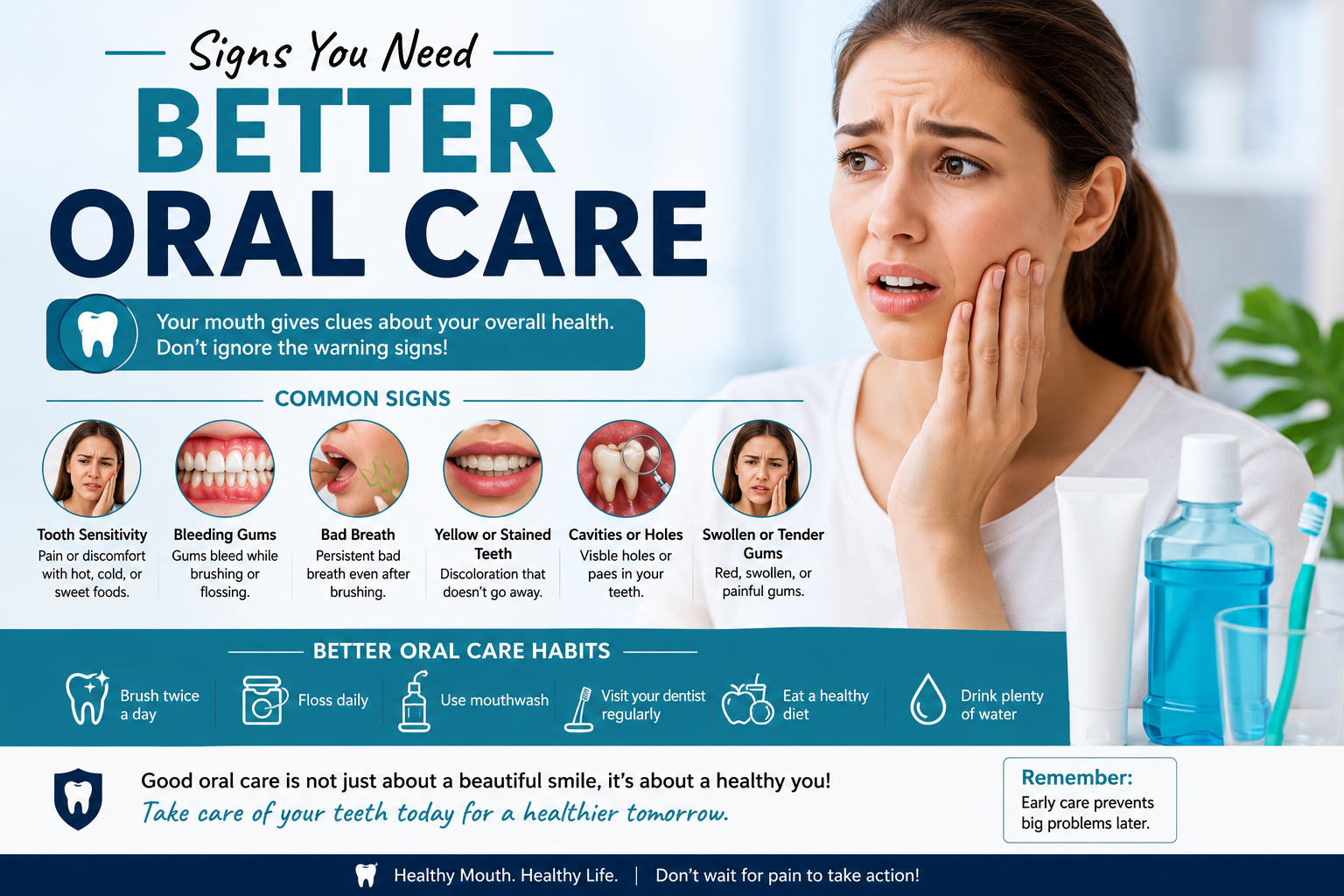
The good news is that your mouth often provides warning signs when something is wrong. Recognizing these symptoms early can help you take action before minor issues become major dental problems.
If you’ve noticed changes in your teeth, gums, or overall oral health, it may be time to improve your oral care habits.
Persistent Bad Breath
One of the most common signs that you need better oral care is persistent bad breath, also known as halitosis. While occasional bad breath can result from certain foods, chronic bad breath may indicate a buildup of bacteria in the mouth.
When food particles remain trapped between teeth and along the gumline, bacteria begin to break them down, producing unpleasant odors. Inadequate brushing, flossing, and tongue cleaning can contribute to this problem.
Improving your daily oral hygiene routine can often help eliminate persistent bad breath and restore freshness.
Bleeding Gums During Brushing or Flossing
Healthy gums should not bleed during routine brushing or flossing. If you regularly notice blood when cleaning your teeth, it could be an early sign of gum inflammation or gingivitis.
Gingivitis develops when plaque accumulates around the gumline, causing irritation and swelling. Without proper treatment, it can progress into more serious forms of gum disease.
Paying closer attention to brushing, flossing, and regular dental cleanings can help improve gum health and reduce bleeding.
Tooth Sensitivity
Experiencing discomfort when consuming hot, cold, sweet, or acidic foods may indicate tooth sensitivity. This condition often occurs when protective enamel becomes worn down or when gum recession exposes sensitive areas of the teeth.
Poor oral care habits, aggressive brushing, tooth grinding, and untreated cavities can all contribute to sensitivity. Addressing the underlying cause and maintaining proper dental hygiene can help reduce discomfort and prevent further damage.
Frequent Cavities
If you find yourself needing fillings regularly, it may be a sign that your oral care routine requires improvement. Cavities develop when plaque bacteria produce acids that gradually erode tooth enamel.
Frequent cavities can result from inadequate brushing, poor flossing habits, excessive sugar consumption, and inconsistent dental visits. Strengthening your oral hygiene practices can significantly reduce the risk of future tooth decay.
Plaque and Tartar Buildup
Plaque is a sticky film of bacteria that continuously forms on teeth. When plaque is not removed through daily brushing and flossing, it hardens into tartar, which can only be removed by a dental professional.
Visible yellow or brown deposits near the gumline often indicate tartar buildup. Excessive plaque and tartar increase the risk of cavities, gum disease, and bad breath. Consistent oral care is essential for preventing these issues.
Swollen or Red Gums
Healthy gums should appear firm and pink. If your gums are swollen, red, or tender, it may indicate inflammation caused by plaque accumulation.
Gum irritation is often one of the earliest signs of poor oral hygiene. Ignoring these symptoms can allow bacteria to spread deeper into gum tissues, potentially leading to periodontal disease.
Improving your brushing and flossing habits can help restore gum health.
Receding Gums
Gum recession occurs when gum tissue gradually pulls away from the teeth, exposing more of the tooth surface and sometimes the root. This can make teeth appear longer than usual and increase sensitivity.
Poor oral hygiene, gum disease, and improper brushing techniques can contribute to receding gums. Early intervention is important because advanced gum recession may lead to tooth instability and other complications.
Loose Teeth
Adult teeth should remain firmly anchored in place. If you notice any movement or looseness, it could be a sign of advanced gum disease or bone loss around the teeth.
Loose teeth often develop gradually and may be accompanied by gum inflammation or discomfort. Maintaining good oral health and seeking professional dental care can help address underlying causes before tooth loss occurs.
Dry Mouth
Saliva plays a crucial role in oral health by washing away food particles and neutralizing harmful acids. A persistently dry mouth can increase the risk of cavities, gum disease, and bad breath.
Certain medications, dehydration, and lifestyle factors can contribute to dry mouth. Drinking adequate water and practicing good oral hygiene can help support a healthier oral environment.
White Spots or Dark Areas on Teeth
Changes in tooth color can sometimes indicate developing dental problems. White spots may be an early sign of enamel demineralization, while dark spots can suggest tooth decay.
Monitoring your teeth for unusual discoloration and maintaining proper oral hygiene can help prevent these issues from progressing into more serious dental conditions.
Mouth Sores That Do Not Heal
Occasional mouth sores are common and usually heal within a couple of weeks. However, sores that persist for an extended period may require attention.
Poor oral hygiene can contribute to irritation and bacterial growth that delay healing. Keeping the mouth clean and monitoring persistent sores is important for maintaining oral health.
Difficulty Chewing or Pain While Eating
Pain or discomfort when chewing should never be ignored. It may indicate cavities, gum disease, cracked teeth, or other dental problems that require attention.
If eating has become uncomfortable, it is often a sign that your oral health needs improvement and that professional evaluation may be necessary.
The Importance of Daily Oral Care
Preventing oral health problems begins with a consistent daily routine. Effective oral care includes brushing your teeth at least twice a day using fluoride toothpaste, flossing daily, cleaning your tongue, and limiting sugary foods and beverages.
Regular dental checkups and professional cleanings also play a critical role in identifying potential issues before they become serious. Prevention is always easier and less costly than treatment.
Conclusion
Your mouth often provides valuable clues about your overall oral health. Persistent bad breath, bleeding gums, tooth sensitivity, frequent cavities, swollen gums, and plaque buildup are all signs that your oral care routine may need improvement.
Recognizing these warning signs early can help prevent more serious dental problems and protect your smile for years to come.
By adopting better oral hygiene habits, maintaining regular dental visits, and paying attention to changes in your mouth, you can enjoy healthier teeth, stronger gums, and improved overall well-being.