Introduction
High blood pressure, also known as hypertension, is one of the most common health conditions affecting millions of people worldwide.
Blood pressure refers to the force of blood pushing against the walls of your arteries as your heart pumps blood throughout the body.
While some pressure is necessary to circulate blood, consistently elevated pressure can damage blood vessels and increase the risk of serious health complications.
Often called the “silent killer,” high blood pressure frequently develops without noticeable symptoms. Many individuals may have hypertension for years without realizing it.
If left unmanaged, it can lead to heart disease, stroke, kidney damage, vision problems, and other health concerns. Understanding the causes of high blood pressure is an important step toward prevention and maintaining long-term cardiovascular health.
Understanding Blood Pressure
Blood pressure is measured using two numbers. The first number, known as systolic pressure, measures the force when the heart beats. The second number, called diastolic pressure, measures the force when the heart rests between beats.
When blood pressure remains consistently higher than normal, the heart and blood vessels are forced to work harder. Over time, this extra strain can damage the cardiovascular system and increase the likelihood of serious health conditions.
Unhealthy Diet
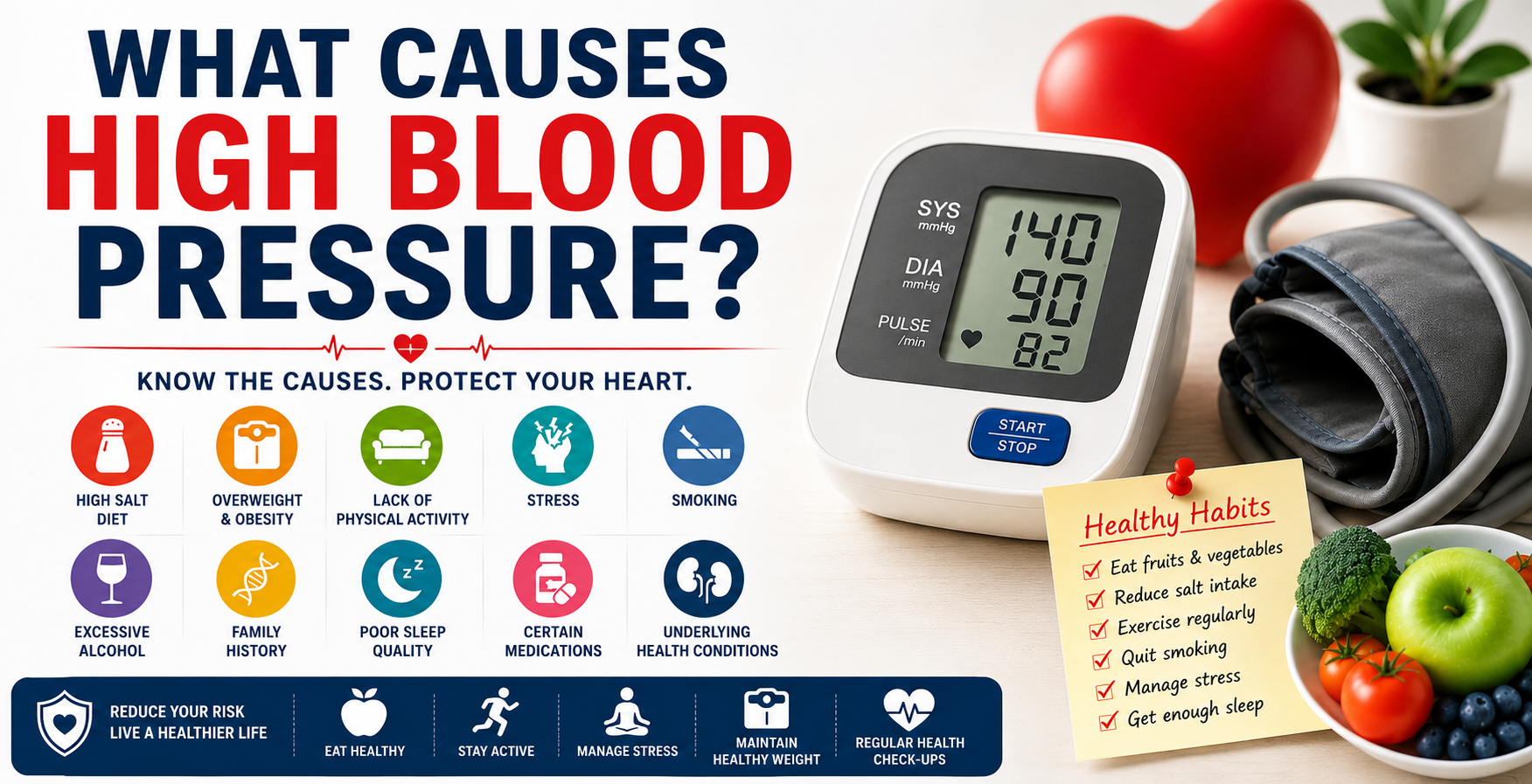
One of the leading causes of high blood pressure is an unhealthy diet. Consuming excessive amounts of sodium, unhealthy fats, processed foods, and added sugars can contribute to elevated blood pressure levels.
High sodium intake causes the body to retain excess water, increasing the volume of blood flowing through the arteries. This places additional pressure on blood vessel walls.
Processed foods such as packaged snacks, fast food, canned soups, and frozen meals often contain large amounts of hidden sodium.
A diet lacking fruits, vegetables, whole grains, and other nutrient-rich foods may also negatively affect blood pressure regulation.
Excess Body Weight
Being overweight or obese significantly increases the risk of developing high blood pressure. Excess body fat places additional demands on the heart and circulatory system, causing the heart to work harder to pump blood throughout the body.
As body weight increases, blood vessels may become less efficient, and hormone imbalances can contribute to higher blood pressure levels.
Maintaining a healthy weight through proper nutrition and regular physical activity is one of the most effective ways to reduce hypertension risk.
Lack of Physical Activity
A sedentary lifestyle can contribute to high blood pressure by weakening the cardiovascular system. Regular exercise helps strengthen the heart, allowing it to pump blood more efficiently and reducing the force exerted on artery walls.
People who are physically inactive are more likely to experience weight gain, poor circulation, and increased blood pressure levels. Even moderate activities such as walking, cycling, swimming, or light exercise can help support healthy blood pressure.
Chronic Stress
Stress is a natural response to life’s challenges, but long-term stress may contribute to elevated blood pressure. During stressful situations, the body releases hormones that temporarily increase heart rate and constrict blood vessels.
While temporary increases are normal, chronic stress may encourage unhealthy behaviors such as overeating, smoking, excessive alcohol consumption, and poor sleep habits, all of which can further raise blood pressure.
Learning healthy stress management techniques can help support both mental and cardiovascular health.
Excessive Salt Consumption
Salt contains sodium, a mineral that directly influences blood pressure regulation. Consuming too much sodium can cause the body to retain fluid, increasing blood volume and raising blood pressure.
Many people consume significantly more sodium than recommended due to processed and restaurant foods. Reducing salt intake and choosing fresh, whole foods can help lower the risk of hypertension and improve heart health.
Smoking and Tobacco Use
Smoking damages blood vessels and contributes to high blood pressure in several ways. Nicotine causes blood vessels to narrow, forcing the heart to work harder to circulate blood.
Each cigarette can temporarily increase blood pressure and heart rate. Over time, repeated exposure to tobacco products damages artery walls and increases the risk of heart disease, stroke, and other cardiovascular complications.
Quitting smoking is one of the most important steps a person can take to improve overall health and lower cardiovascular risk.
Excessive Alcohol Consumption
Drinking excessive amounts of alcohol can contribute to high blood pressure and other health problems. Alcohol may increase blood pressure directly and can also lead to weight gain, which further increases hypertension risk.
Moderating alcohol intake and adopting healthier lifestyle habits can help support better blood pressure control and overall cardiovascular wellness.
Poor Sleep Quality
Sleep plays a vital role in regulating many bodily functions, including blood pressure. During sleep, the body naturally lowers blood pressure and allows the cardiovascular system to recover.
Insufficient sleep, irregular sleep schedules, and sleep disorders such as sleep apnoea can disrupt this process and contribute to hypertension. Adults should aim for seven to nine hours of quality sleep each night to support heart health.
Family History and Genetics
Genetics can influence a person’s likelihood of developing high blood pressure. Individuals with close family members who have hypertension may be at greater risk.
While genetic factors cannot be changed, healthy lifestyle choices can help reduce the impact of inherited risk factors and support better blood pressure management.
Aging
As people grow older, blood vessels naturally become less flexible and may gradually stiffen. This can increase resistance to blood flow and contribute to higher blood pressure levels.
Although ageing increases risk, hypertension is not an inevitable part of growing older. Healthy habits can help maintain cardiovascular health throughout life.
Certain Medical Conditions
Several underlying medical conditions can contribute to high blood pressure. These include:
- Kidney disease
- Diabetes
- Thyroid disorders
- Sleep apnea
- Hormonal imbalances
- Chronic kidney problems
Managing these conditions properly can help reduce the risk of developing hypertension and associated complications.
Certain Medications
Some medications may contribute to elevated blood pressure as a side effect. Examples include certain pain relievers, decongestants, corticosteroids, and hormonal medications.
Individuals taking prescription medications should consult healthcare professionals if they have concerns about blood pressure changes.
Warning Signs and Symptoms
Although high blood pressure often develops without symptoms, severely elevated blood pressure may sometimes cause:
- Headaches
- Dizziness
- Shortness of breath
- Blurred vision
- Chest discomfort
- Nosebleeds
Because symptoms are often absent, regular blood pressure monitoring is essential for early detection and management.
Preventing High Blood Pressure
Many causes of high blood pressure are linked to lifestyle factors that can be improved.
Preventive measures include maintaining a healthy weight, eating a balanced diet, reducing sodium intake, exercising regularly, avoiding tobacco products, limiting alcohol consumption, managing stress, and getting adequate sleep.
Regular health checkups and blood pressure screenings can help identify potential issues before they become serious.
Conclusion
High blood pressure is a common but potentially serious condition that can increase the risk of heart disease, stroke, kidney damage, and other health complications.
Factors such as poor diet, excess weight, physical inactivity, stress, smoking, alcohol consumption, poor sleep, genetics, and aging can all contribute to elevated blood pressure.
The good news is that many risk factors can be managed through healthy lifestyle choices. By understanding what causes high blood pressure and taking proactive steps to protect cardiovascular health, individuals can significantly reduce their risk and improve their overall quality of life.